

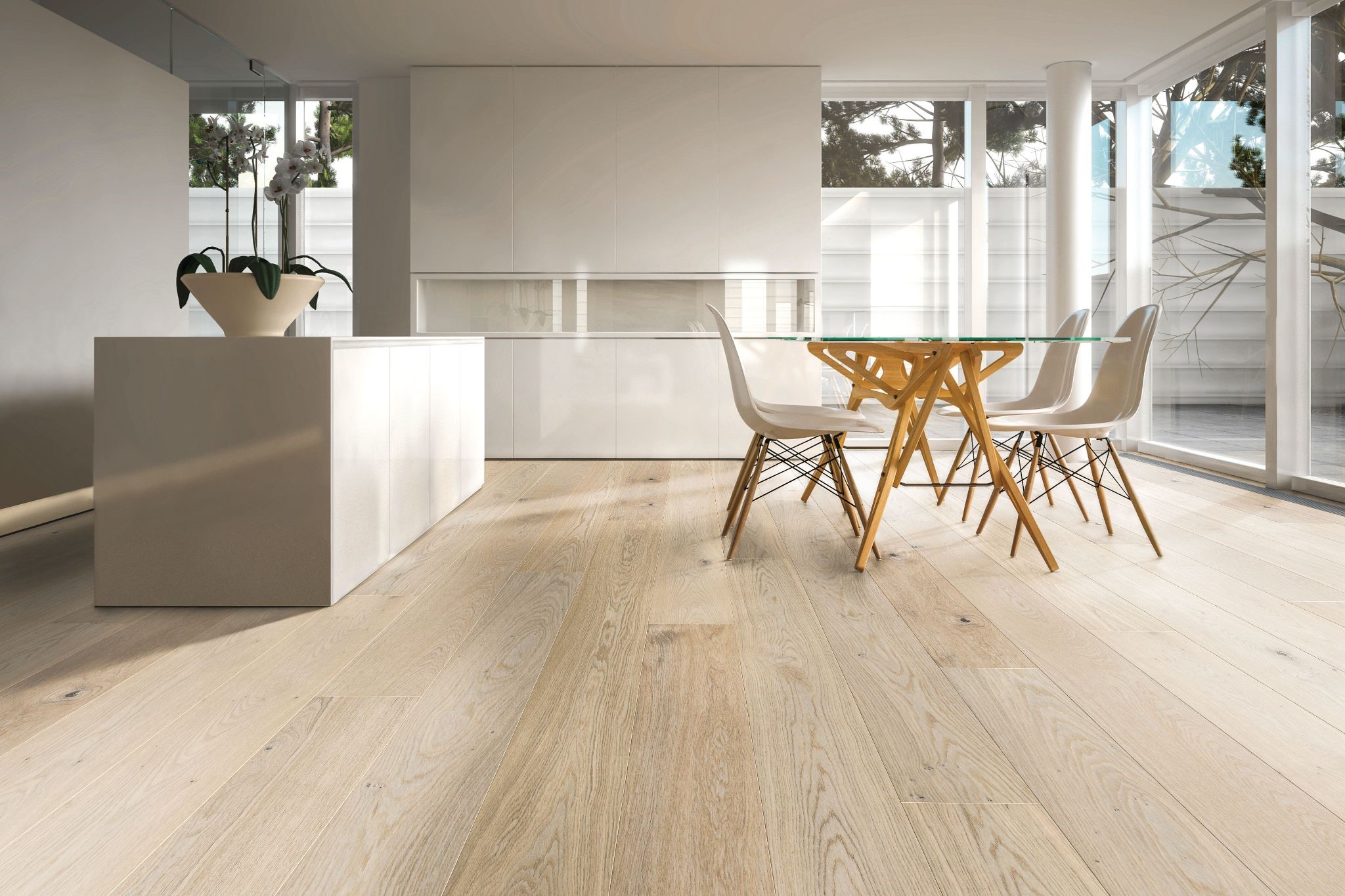
For decades, solid hardwood was considered the gold standard of residential flooring. It represented permanence, luxury, and unmatched organic beauty. However, traditional solid wood planks possess an inherent structural vulnerability: they are highly sensitive to environmental fluctuations. Changes in humidity and temperature cause solid timber to swell, shrink, cup, and warp, limiting its placement to climate-controlled upper levels of a home.
Enter engineered hardwood flooring. Developed as a high-performance solution to the instability of solid timber, engineered hardwood has evolved into one of the most popular flooring materials on the market. It bridges the gap between natural luxury and structural engineering, delivering the exact look, feel, and prestige of solid wood alongside vastly superior stability.
To make an informed decision for your home renovation, you must understand the technology, construction variations, and installation nuances of this modern flooring marvel. Here is everything you need to know about engineered hardwood flooring.
The Anatomy of an Engineered Hardwood Plank
Unlike a solid wood plank, which is milled from a single piece of timber, an engineered hardwood plank is a composite masterpiece. It is constructed from multiple layers of wood bonded together under immense heat and pressure. Each layer plays a critical role in the overall performance of the floor.
The Wear Layer (Lamella)
The top layer of an engineered plank is called the wear layer or lamella. This is 100 percent genuine noble hardwood. When you walk on, look at, or clean an engineered floor, you are interacting with real wood, such as European white oak, American walnut, hard maple, or hickory. The thickness of this layer typically ranges from 0.6 millimeters to 6 millimeters. A thicker wear layer dictates the long-term value of the product, as it determines how many times the floor can be sanded and refinished over its lifespan.
The Core Layer
Beneath the premium veneer sits the engine room of the plank: the core. The core provides the structural integrity and dimensional stability that makes engineered flooring famous. There are two primary core construction styles:
-
Plywood Core: Built from multiple thin layers of hardwood veneer (such as birch or eucalyptus) stacked in a cross-grain configuration. Each layer runs perpendicular to the one above and below it. When moisture prompts one layer to expand lengthwise, the adjacent layer counteracts that movement widthwise, effectively neutralizing structural stress.
-
High-Density Fiberboard (HDF) Core: Made from highly compressed wood fibers blended with resin. HDF cores are exceptionally hard, dense, and uniform, providing superior resistance to impact dents and high foot traffic.
The Backing Layer
The final bottom layer acts as a structural stabilizer. Typically made from a fast-growing softwood like pine or spruce, the backing layer seals the underside of the plank. It resists moisture vapor rising from the subfloor and balances the physical tension exerted by the upper layers, ensuring that the plank remains perfectly flat and true over decades of use.
Key Advantages of Engineered Hardwood
Understanding why engineered hardwood has overtaken traditional alternatives requires looking at how its unique construction translates to real-world performance.
-
Exceptional Dimensional Stability: Because of its cross-laminated core, engineered hardwood expands and contracts up to 80 percent less than solid wood. It can withstand seasonal humidity shifts without developing unsightly gaps between planks or cupping along the edges.
-
Subfloor Versatility: Solid wood must be nailed down to a plywood subfloor on or above ground level. Engineered hardwood can be installed over concrete slabs, old vinyl flooring, or plywood, making it ideal for high-rise condos and apartments.
-
Below-Grade Installation: Thanks to its moisture resistance, engineered hardwood can be safely installed in finished basements, assuming proper vapor barriers are utilized. This is an environment where solid wood would inevitably fail.
-
Eco-Friendly Efficiency: Exotic or slow-growing trees go significantly further when manufacturing engineered planks. A single log that yields one solid wood plank can produce multiple slices of wear-layer veneer, maximizing natural resources while using fast-growing, sustainable softwoods for the internal cores.
-
Underfloor Heating Compatibility: Engineered wood is an excellent conductor of heat and responds beautifully to radiant underfloor heating systems without cracking or drying out, a feat solid hardwood struggle to achieve safely.
Evaluating Wear Layer and Slicing Methods
When shopping for engineered hardwood, the price variations you encounter are driven primarily by the thickness and manufacturing method of the wear layer.
The way the wear layer is cut from the log dictates its final aesthetic quality. There are three primary cutting techniques:
Dry-Sawn Wood Cut
This method mimics how solid hardwood is cut. The log is sliced straight through, preserving the natural grain patterns, variations, and mineral streaks of the wood species. Dry-sawn veneers are typically thicker (3mm to 6mm) and look completely indistinguishable from solid wood, though they represent the highest price point.
Sliced-Veneer Cut
The log is prepped by soaking it in water to soften the fibers before a blade slices layers off at an angle. This process yields an authentic grain pattern, but the manufacturing stresses can introduce micro-cracks into the wood. Sliced veneers generally measure between 1mm and 2mm in thickness, offering an ideal balance of visual quality and affordability.
Rotary-Peeled Cut
The log is boiled and placed on a massive lathe, where a long blade peels a continuous, thin sheet of wood off the rotating trunk, much like unrolling a spool of paper. While highly efficient and cost-effective, rotary peeling distorts the natural grain pattern, giving the wood a repetitive, unnatural appearance. These thin layers cannot be refinished.
Installation Methods: Floating vs. Glue-Down
Engineered hardwood offers incredible flexibility during installation. Depending on your subfloor type and lifestyle requirements, professional installers will deploy one of three techniques.
The Floating Method
In a floating installation, the planks are not affixed to the subfloor beneath them. Instead, they feature an advanced click-lock or tongue-and-groove system where the planks lock together to form a single, continuous mat. The entire floor floats above a high-quality foam underlayment. This method is incredibly fast, DIY-friendly, budget-conscious, and allows the floor to expand and contract freely as a single unit.
The Glue-Down Method
This technique involves spreading a heavy-duty, moisture-curing adhesive directly onto the concrete or wood subfloor using a trowel, then pressing the planks firmly into the glue. Glue-down installations feel incredibly solid underfoot, completely eliminating the hollow, clicking sound sometimes associated with thin floating floors. This is the preferred method for wide-plank profiles and installations over radiant heating systems.
The Nail/Staple Method
If you have a traditional plywood subfloor, engineered planks can be nailed or stapled through the tongue down into the wood using a pneumatic flooring nailer. This provides a permanent, time-tested mechanical bond.
Essential Long-Term Maintenance Rules
While engineered hardwood is structurally tougher than solid wood, it is still a natural product coated in premium finishes. It requires mindful care to preserve its pristine look.
-
Manage Home Humidity: To keep your wood at peak performance, maintain your home’s relative humidity between 35 percent and 55 percent year-round using a dehumidifier or humidifier depending on the season.
-
Banish Water Exposure: Never use a steam mop, wet mop, or bucket of water on engineered wood. Excess moisture can seep into the seams, causing the core layers to swell and delaminate. Instead, opt for a dry dust mop or a microfiber mop lightly misted with a dedicated, pH-neutral hardwood floor cleaner.
-
Protect High-Traffic Points: Place breathable rugs or mats at external entryways to catch abrasive dirt, sand, and pebbles. Affix thick felt pads to the bottom of all furniture legs, and keep pet nails trimmed to avoid surface scratching.
Frequently Asked Questions
Can all engineered hardwood floors be sanded and refinished?
No, the ability to sand and refinish depends entirely on the thickness of the top wear layer. A wear layer of 1 millimeter or less cannot be sanded at all, as the sanding machine would tear through to the plywood core. A wear layer of 2mm to 3mm can be lightly sanded and refinished once or twice over its lifetime. Premium wear layers measuring 4mm to 6mm can be fully refinished three to five times, matching the longevity of solid wood.
What is the difference between engineered hardwood and laminate flooring?
Engineered hardwood features a top surface made of 100 percent real wood veneer, meaning no two planks look identical. Laminate flooring is a fully synthetic product consisting of a high-density fiberboard base topped with a photographic image layer that mimics wood, sealed under a clear plastic wear layer. Engineered wood carries a higher resale value and feels natural, whereas laminate is a budget-friendly option.
Is engineered hardwood waterproof?
No, engineered hardwood is water-resistant but not waterproof. While it handles ambient humidity and minor surface spills much better than solid wood, standing pools of water or major plumbing floods will warp the wood and damage the internal adhesive bonds. For absolute waterproof performance, homeowners typically look to luxury vinyl plank flooring.
Why do some engineered hardwood floors sound hollow when walked on?
A hollow or clicking sound occurs almost exclusively with floating floor installations where a subfloor is uneven or the installer used a cheap, low-density foam underlayment. To prevent this sound, ensure your subfloor is perfectly flat prior to installation, or choose a glue-down installation method, which anchors the planks securely and absorbs acoustic vibrations.
What is the Janka hardness scale and does it matter for engineered wood?
The Janka scale measures a wood species’ resistance to denting and wear by calculating the force required to embed a small steel ball halfway into the wood. It matters significantly when choosing your wear layer species. If you have large dogs or active children, you should choose a high-Janka hardwood veneer like hickory or hard maple rather than a softer wood like walnut or cherry.
Can engineered hardwood be installed in full bathrooms?
It is highly discouraged. While engineered wood performs well in kitchens and powder rooms where spills are minor and quickly cleaned, the extreme humidity, steam, and frequent standing water from showers and bathtubs in a full bathroom will eventually ruin the real wood veneer and compromise the structural core.
